

Full Truckload Shipping Explained: What It Is and When to Choose It
Full truckload shipping (FTL) is a form of road freight in which one truck or trailer is dedicated to a single shipment. The goods are not combined with cargo from other shippers and usually travel directly from the loading location to the delivery destination.
But what exactly counts as a full truckload? And how does FTL differ from LTL and groupage transport?
The main difference is how the available truck capacity is used. With FTL, one shipment has a dedicated vehicle. With LTL and groupage, several smaller shipments can share transport capacity.
On this page, we explain what full truckload shipping means, how FTL works, the difference between FTL, LTL and groupage, and how factors such as shipment size, handling and transit time differ between these transport methods.
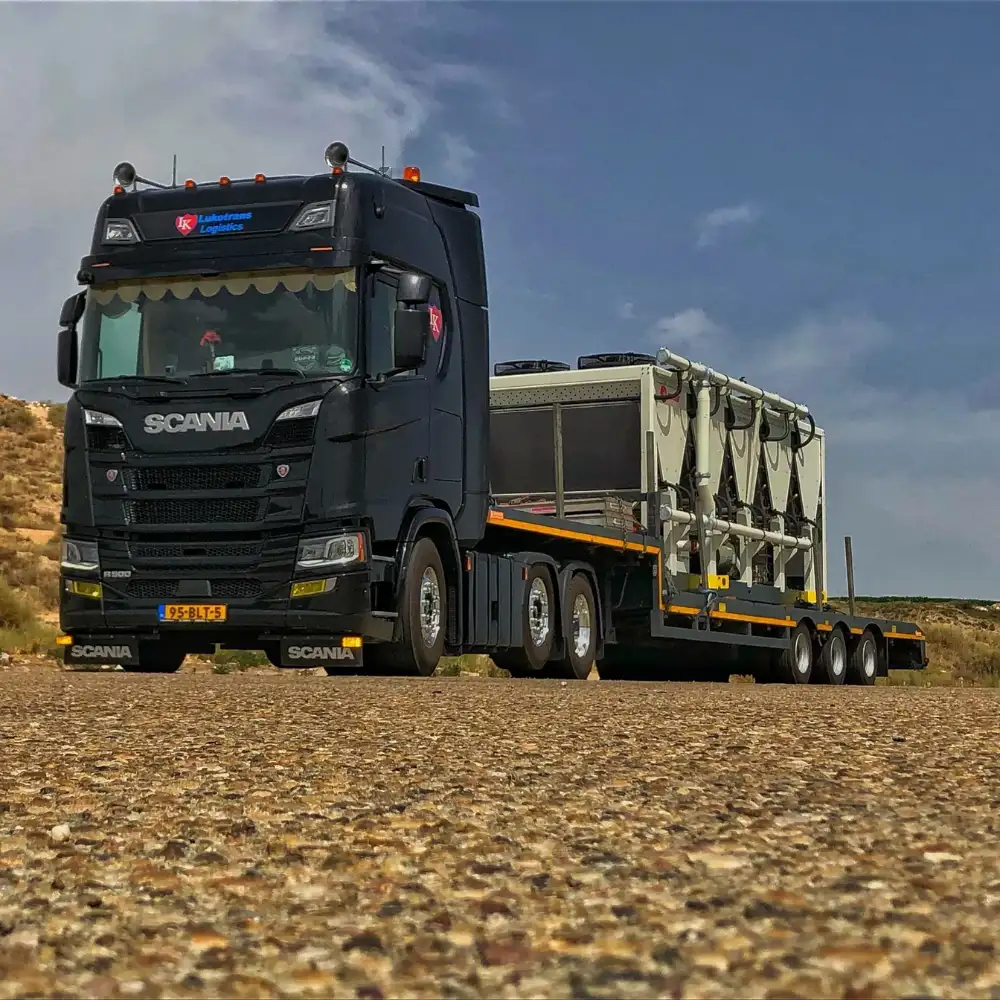
What is full truckload shipping?
Full truckload shipping means that a truck or trailer is reserved for one shipment. The cargo is not combined with goods from other companies during transport.
Although the term suggests that the trailer must be completely full, this is not always the case. A shipment can also be transported as FTL when it only uses part of the available capacity, as long as the vehicle is dedicated to that shipment.
Because there are no other shipments to collect or deliver, FTL transport usually follows a direct route from the loading address to the final destination. This also means that the goods generally require less handling during transit.
FTL vs. LTL vs. groupage. what's the difference?
FTL, LTL and groupage all describe ways of organising road freight, but they differ mainly in how truck capacity is shared and how shipments move through the transport network.
Full truckload shipping (FTL) means that one truck or trailer is dedicated to a single shipment. Other shippers’ goods are not added to the vehicle, even when the shipment does not use all available space.
Less-than-truckload (LTL) is used when a shipment does not require an entire truck. Several shipments from different companies can therefore be transported together on the same vehicle. The available truck capacity is shared between multiple customers.
Groupage transport also combines several smaller shipments, but these goods are typically collected and consolidated within a wider transport network. Shipments may pass through terminals or distribution hubs before being forwarded to their final destinations.
In practice, this creates several differences between FTL, LTL and groupage.
With FTL, goods are generally loaded at the point of departure and unloaded again at their final destination. With LTL and groupage, shipments may be transferred or handled additional times as different loads are combined and separated.
Transit times can also differ. FTL transport is usually more direct, because the vehicle does not have to follow a consolidation network. With LTL or groupage, the journey can include additional collection points, distribution hubs or delivery stops.
Another difference is how transport capacity is used. With FTL, the shipper reserves the vehicle. With LTL and groupage, the available space is divided between multiple shipments.
When is full truckload shipping the right choice?
The choice between FTL, LTL and groupage depends on more than the price per pallet, kilogram or cubic metre. Shipment size, delivery time, handling requirements and the type of cargo also influence which transport method is most suitable.
FTL is commonly used for time-sensitive shipments because the truck can travel directly from the loading point to the destination without waiting for other loads to be consolidated.
It can also be suitable for fragile, valuable or sensitive cargo. Fewer loading and unloading moments generally mean less handling during transport.
For larger shipments, FTL becomes increasingly relevant because a significant part of the trailer capacity is already required. Smaller shipments are more commonly transported through LTL or groupage networks.
Some types of regulated or specialised freight, such as certain dangerous goods, oversized cargo or goods requiring specific transport conditions, may also require a dedicated vehicle.
The delivery location can matter as well. Sites with fixed time slots, access procedures or strict arrival requirements may be easier to serve with direct transport than through a wider consolidation network.
| Situation | FTL | LTL | Groupage |
|---|---|---|---|
| Full or near-full trailer | ✓ | ✗ | ✗ |
| Medium-sized partial load | ✗ | ✓ | ✗ |
| Small shipment / few pallets | ✗ | ✗ | ✓ |
| Direct transport | ✓ | ✓ | ✗ |
| Consolidation via hub | ✗ | ✗ | ✓ |
| Urgent delivery | ✓ | ✓ | ✗ |
| Fragile or sensitive cargo | ✓ | ✓ | ✗ |
| Flexible delivery time | ✓ | ✓ | ✓ |
| Multiple small shipments combined | ✗ | ✓ | ✓ |
Full truckload shipping and ADR. What changes with hazardous cargo
When a full truckload contains dangerous goods covered by ADR, additional rules apply to the vehicle, driver, documentation and route.
ADR divides dangerous goods into different hazard classes, including explosives (Class 1), gases (Class 2), flammable liquids (Class 3), toxic substances (Class 6), radioactive materials (Class 7) and corrosive substances (Class 8). The classification determines which transport requirements apply.
For FTL transport with ADR cargo, several factors are important:
Driver certification. The driver must hold the appropriate ADR qualification for the goods being transported.
Vehicle requirements. Depending on the ADR class, the vehicle may require specific equipment, containment systems, tanks, load-securing measures or emergency equipment.
Documentation. ADR shipments require specific transport information, such as the UN number, proper shipping name, hazard class and, where applicable, packing group. The required documentation must be available during transport.
Route restrictions. Some tunnels, roads and areas have restrictions for certain types of dangerous goods. Route planning therefore has to take the ADR classification into account.
The exact requirements depend on the type, classification, quantity and packaging of the dangerous goods. This means ADR transport cannot be treated in exactly the same way as standard full truckload shipping.
More information about the practical requirements for different types of hazardous freight can be found on our transportation of dangerous goods page.
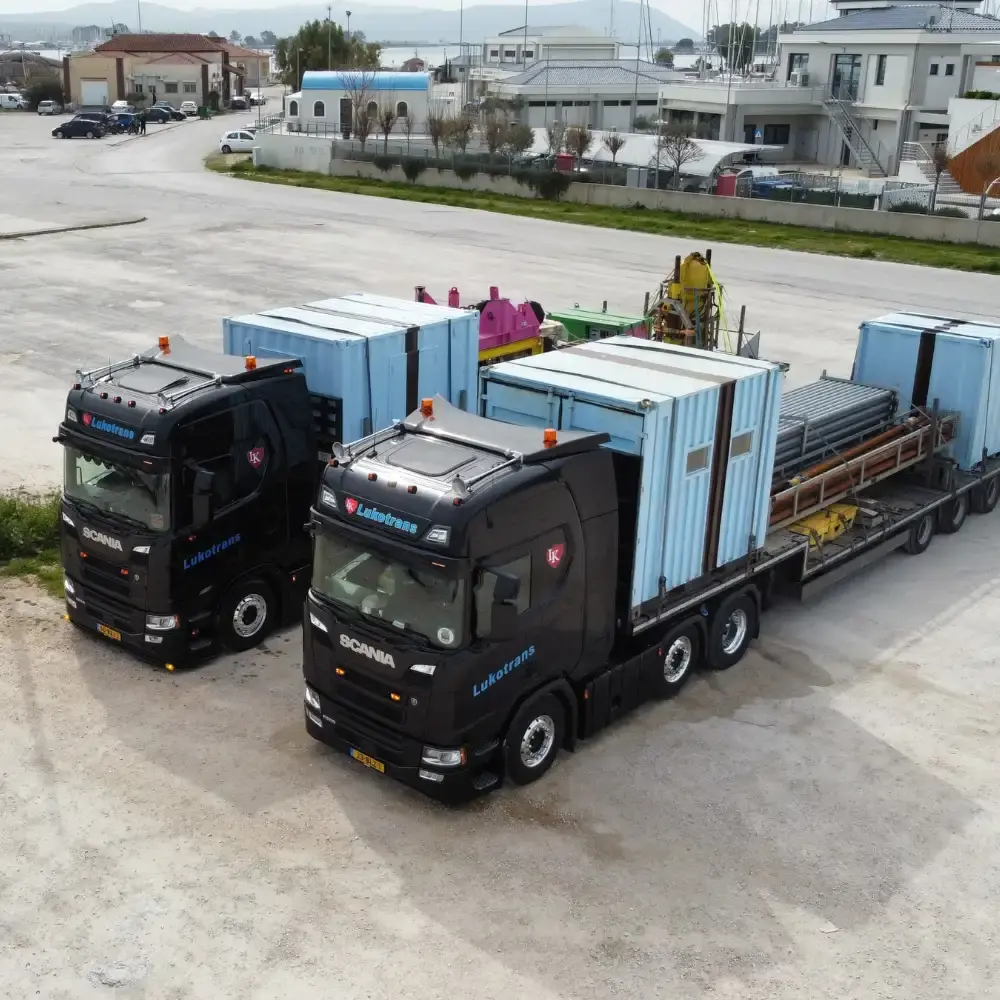
What drives the cost of full truckload shipping?
The cost of full truckload shipping is usually based on a dedicated vehicle travelling a specific route. The final rate can vary considerably depending on the shipment, route and transport requirements.
Distance and route. Distance is one of the main cost factors, but rates do not increase at a fixed price per kilometre. Border crossings, tolls, driving-time regulations and route availability can all influence the total cost.
Cargo type and requirements. Standard palletised freight generally requires fewer additional measures than oversized, heavy or specialised cargo. Extra equipment, permits or handling requirements can therefore affect the rate.
ADR classification. Dangerous goods may require an ADR-certified driver, suitable equipment and additional safety procedures. The classification and quantity of the goods determine which requirements apply.
Timing and urgency. Transport planned in advance usually offers more scheduling flexibility. Urgent or time-critical shipments can require a vehicle to be made available specifically for that movement, which can increase costs.
Loading and unloading conditions. Restricted access, fixed time slots, waiting times, safety procedures and special loading equipment can all influence how much time is required at the origin or destination.
Return load availability. Freight flows differ by route. When a suitable return load is available, a truck can be used efficiently in both directions. On routes with limited return freight, part of the cost of an empty return journey may be reflected in the transport rate.
Because these factors differ from shipment to shipment, there is no single fixed price for FTL transport. Two loads covering the same distance can have different costs because of cargo type, timing, equipment requirements or route conditions
FTL as part of a broader logistics setup
A single full truckload rarely exists in isolation. In industrial and project environments, FTL typically connects to other parts of the supply chain: inbound shipments from ports or suppliers, storage before delivery, customs clearance for cross-border movements, or phased delivery against a project schedule.
Lukotrans offers full truckload shipping as part of a broader service portfolio that includes warehousing, customs handling, LTL groupage transport, project logistics and dangerous goods transport. This means FTL shipments can be coordinated as part of a wider logistics plan rather than arranged as standalone events.
For a full explanation of how Lukotrans organises and executes FTL transport, fleet, process, planning and communication, visit our FTL Transport page.
How our ftl transport process works in daily operations
We keep ftl transport practical and transparent. You know what will happen and who is responsible at each step.
It starts with a clear request. You share the pickup and delivery addresses, time windows, cargo details and any special requirements. Based on that, we propose a realistic plan, including loading time, route and estimated arrival. If you have recurring flows, we can translate them into a regular schedule with agreed slots and dedicated capacity.
In many cases, a full truckload with Lukotrans follows a simple pattern:
- You send your transport order with all relevant information about the shipment and the planning.
- Our team assigns the right tractor and trailer combination and confirms the details with you.
- The driver arrives on site for loading, checks the cargo and secures it so it can travel safely over long distances.
- We drive directly to the destination and unload according to your instructions, with proof of delivery shared once the job is done.
Throughout the journey, our operations team monitors progress and remains available for questions or last minute changes. That way, ftl transport becomes a seamless part of your internal processes instead of something you constantly have to chase.
Why choose Lukotrans as your ftl transport partner
Selecting a provider for ftl transport is about more than finding a truck at a certain rate. It is about choosing a partner you trust with your cargo, your planning and your reputation.
Lukotrans operates as an asset based company. That means we invest in our own tractors and trailers and in the people who operate them. For you, this translates into stable capacity, consistent quality and direct communication with the team that actually performs the ftl transport. You are not dealing with a long chain of intermediaries but with a logistics partner that takes ownership.
We also look beyond a single shipment. Many of our customers work with us on long term lanes, route networks and project setups. Together we analyse flows, identify where ftl transport adds the most value and design combinations with other services, such as less than truckload, dangerous goods, warehousing or handling. The result is a solution that supports your business year round instead of a quick fix when something needs to move tomorrow.
FTL transport with our own fleet and direct coordination
Lukotrans carries out full truckload transport with dedicated vehicles, experienced drivers and direct coordination from pickup to delivery. Depending on the shipment, we can arrange standard FTL transport as well as time-critical, specialised and ADR-classified freight.
Because we operate with our own fleet, routes, loading times and delivery requirements can be coordinated around the specific shipment. This is especially relevant for international transport, industrial deliveries and cargo that requires precise planning or additional handling requirements.
Want to know how we would organise your shipment? Read more about our FTL transport service or request a quote based on your route and cargo requirements.
Full truckload shipping: frequently asked questions
Does full truckload shipping require special documentation?
Standard FTL requires a CMR consignment note and any applicable customs documentation for cross-border movements. Shipments containing dangerous goods require additional ADR documentation: transport document, safety data sheets and, for certain classes, special permits.
Can full truckload shipping handle oversized or heavy cargo?
Yes. Oversized or heavy cargo that exceeds standard dimensions may require specialised trailers, route surveys and permits. Lukotrans handles special and heavy transport as part of its service offering.
How do I get a price for full truckload shipping?
FTL pricing is route- and cargo-specific. You can request a quote directly via the Lukotrans website. Providing accurate details, origin, destination, cargo dimensions and weight, timing and any special requirements, produces the most reliable quotation.
Can I book full truckload shipping if my cargo does not fill the entire trailer?
Yes. Full truckload shipping refers to the use of a dedicated vehicle, not necessarily a full trailer. Many companies choose FTL even when they use only part of the available capacity because they need greater control, reduced handling or a fixed delivery schedule.
What are the main advantages of full truckload shipping?
The main advantages are direct transit, fewer handling moments, greater schedule control, improved cargo security and clear accountability throughout the transport process. These benefits become particularly valuable in industrial and project-driven supply chains.
