

FTL logistics: when dedicated capacity is the only right answer
FTL logistics is not necessary for every shipment. But when it does, the decision to go FTL is rarely just about volume, it’s about control, timing and the cost of getting it wrong.
FTL logistics is the strategic choice when a shipment cannot afford to wait for consolidation, cannot share handling exposure with other cargo, or must arrive at a specific moment within a larger project plan. At Lukotrans, we work with companies in industrial, energy and project-driven environments where the logistics decision directly shapes operational outcomes.
This page explains when FTL logistics is the right model, how it compares to LTL in real project scenarios, and how dedicated transport connects to the broader supply chain (including warehousing and customs).
Looking for practical FTL transport execution? See our FTL transport page for fleet details, routing and process.
- Direct transport from A to B, without detours
- Ideal for time-sensitive, fragile or high-value goods
- Handled by certified drivers using our own modern fleet
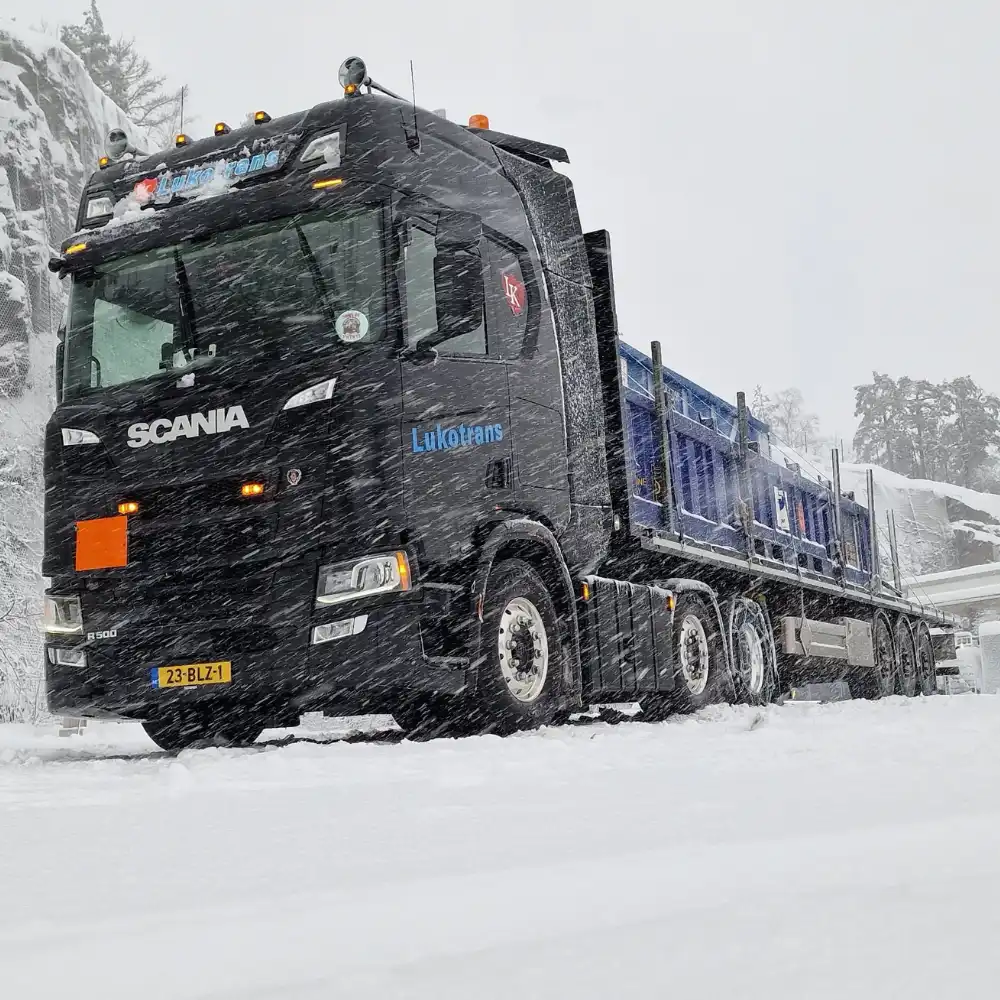
FTL logistics or LTL? The decision that shapes your supply chain
The choice between Full Truckload (FTL logistics) and Less-than-Truckload (LTL logistics) is often framed as a cost question. In practice, it’s a risk and control question, and the financial implications follow from that.
What you gain with FTL logistics
With FTL logistics, a dedicated vehicle is reserved for your shipment from loading to final delivery. No intermediate stops. No shared handling. No dependency on another shipper’s schedule. The cargo moves when you need it to move, on a route designed around your site, your time window and your operational constraints.
This matters when:
- Your shipment supports a fixed project milestone (installation, commissioning, vessel departure)
Cargo is high-value, sensitive to handling or - difficult to replace on short notice
- The delivery window is narrow and a late arrival causes measurable downtime or cost
- Cargo requires specific securing, positioning or documentation (ADR, out-of-gauge, temperature)
What LTL offers, and where it falls short
LTL groups multiple shippers’ cargo on a single truck, which reduces cost per shipment. It is well-suited for smaller, flexible flows where exact timing is secondary and handling risk is low.
LTL transport becomes unreliable when:
- Transit time variability is unacceptable (consolidation typically adds 24–72 hours per hub)
- Cargo size or weight makes consolidation impractical
- Access requirements at origin or destination don’t match a standard groupage schedule
- The supply chain requires visibility and accountability at every step
The cost/control comparison
| Factor | FTL logistics | LTL logistics |
|---|---|---|
| Cost per shipment | Higher | Lower |
| Cost of a delay | Predictable and low | Potentially high (site downtime) |
| Transit time | Direct, fixed | Variable (typically +1 to 3 days in standard groupage operations) |
| Handling touchpoints | 2 (load + unload) | Typically 4–8 in standard groupage operations |
| Damage risk | Low | Higher |
| Accountability | Single carrier | Chain of parties |
| Suitable for project logistics | Yes | Rarely |
FTL logistics within a broader supply chain
A dedicated truck is rarely the only moving part. In industrial and project environments, FTL logistics functions as a link in a longer chain that often includes warehousing, cross-docking and customs clearance. Understanding how these connect prevents gaps and delays.
From warehouse to site. Goods arrive at a consolidation or storage point and are then dispatched to project sites or operational locations via FTL. Lukotrans can connect inbound flows to outbound FTL departures, with cargo held in controlled storage until the project window opens.
Customs integration. Cross-border FTL movements require aligned documentation: CMR, packing lists, customs declarations, ADR certificates if applicable. When documentation is incomplete or misaligned, a full truck sits at a border crossing. Lukotrans prepares documentation as part of transport planning, not as an afterthought.
Phased project deliveries. Large projects don’t receive everything at once. FTL logistics in project environments means coordinating multiple dedicated movements against a master project schedule, each truck timed to arrive when the site is ready to receive it, not before and not after.
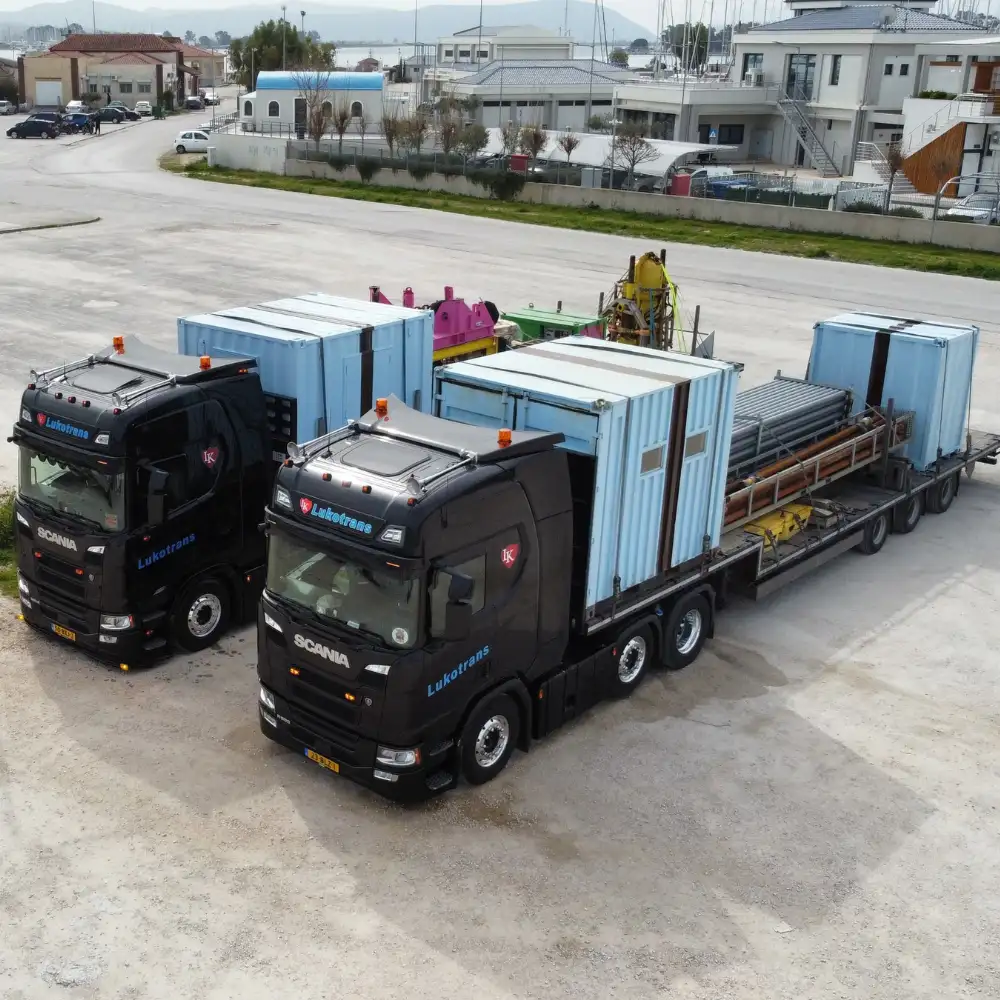
When industrial and project operations choose FTL
FTL logistics is the default model in sectors where logistics failure has immediate operational consequences.
Energy and renewables. Drilling operations and large-scale maintenance campaigns depend on materials arriving exactly when planned. A missed delivery window doesn’t just slow logistics, it stops work. FTL gives planners the certainty they need to commit to operational schedules.
Maritime and dredging. Port and terminal deliveries operate under strict access rules and fixed time windows. Sharing a truck with other cargo means depending on other shippers’ schedules. FTL removes that dependency entirely.
Industrial maintenance and shutdowns. Planned shutdowns and turnarounds have a fixed start date. All materials must be on-site before the window opens. FTL logistics, coordinated against a shutdown schedule, ensures nothing is waiting for a groupage truck when the work needs to begin.
ISO-certified execution as standard
FTL logistics in industrial environments is subject to strict safety and compliance requirements, not as an optional add-on, but as a condition of entry on many sites. Lukotrans operates according to ISO 9001, 14001 and 45001 standards, covering quality, environmental management and occupational safety.
This means routes are assessed before departure, documentation is verified before loading, and drivers are trained for demanding operational environments. Compliance is built into planning, not added at the end.
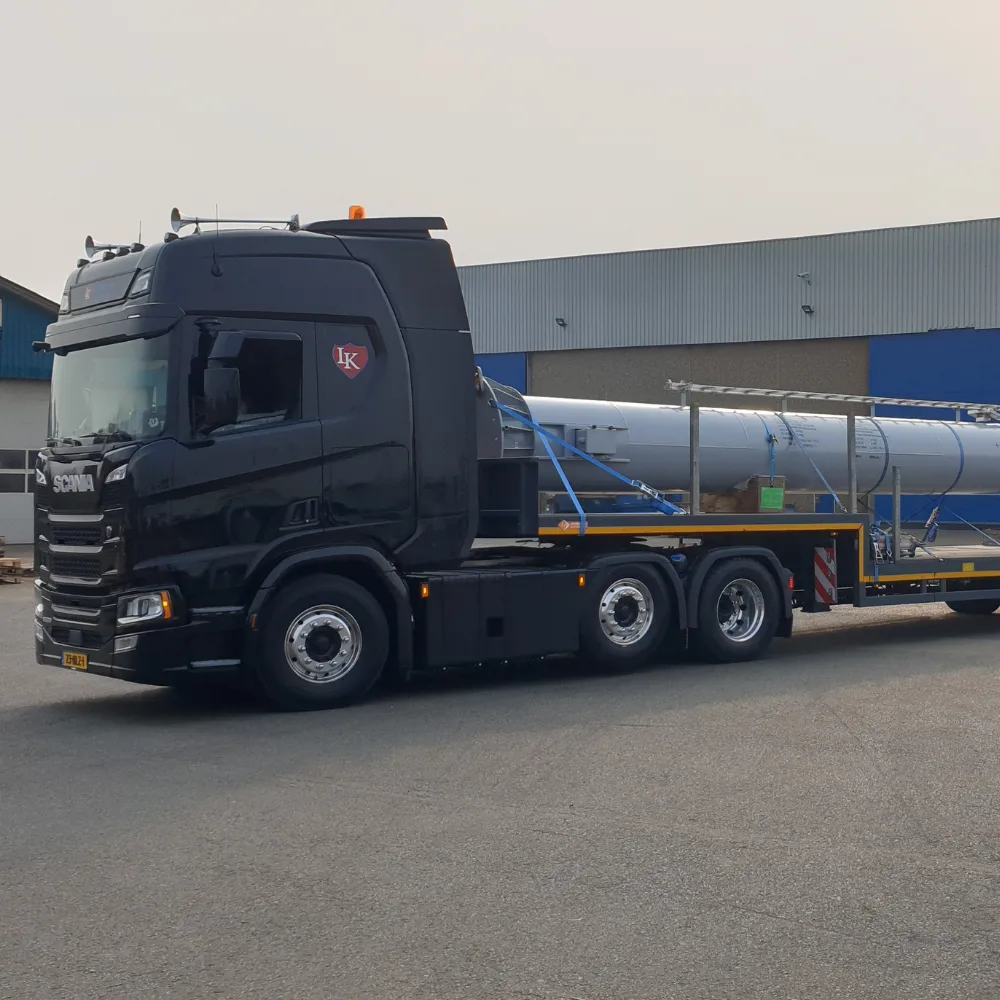
FTL logistics: frequently asked questions
When should I choose FTL over LTL?
When the cost of a delayed or damaged delivery exceeds the cost difference between FTL logsitics and LTL logistics. In project and industrial environments, this threshold is reached quickly.
Can FTL logistics be planned around a project schedule?
Does FTL logistics include customs handling?
How does FTL logistics connect to warehousing?
Where can I find details on your FTL fleet and transport process?
See our FTL transport page for information on vehicles, routing and day-to-day execution.
